I’m an Asian Dad living in Mainland China. I was recently laid off from an English-speaking workplace due to geopolitical factors. However, I am determined to continue improving my English skills, even without the daily immersion of a professional English environment.
Why keep learning English?
English skills are crucial for my career growth and personal development for several reasons:
-
Global Job Opportunities
English is the lingua franca of the global tech industry. Proficiency opens doors to international teams, global job markets, and collaborative projects that span multiple countries. -
Open Source Contribution
Many open-source projects use English as their primary language for documentation and communication. Being proficient in English allows me to contribute to these projects, enhancing my skills and reputation in the global tech community.
But why does a mid-career developer in China need global opportunities? Here are a few reasons:
-
Physical and Stress-Related Factors Mid-career tech professionals in Mainland China often feel unwelcome in domestic tech companies due to the high-stress “996” culture, which is often incompatible with family responsibilities.
-
Intense Competition
The industry attracts a massive number of young graduates willing to work long hours for lower pay. -
Market Priorities
Technical experience is often not the critical factor for many local companies. Because development speed and rapid market penetration are key, software quality, performance, and maintainability—which require years of experience—are often sacrificed for speed. -
The “Tear Down and Rebuild” Culture
A culture of complete “demolition and reconstruction” has become deeply ingrained. This affects everything from infrastructure to software development, where there is a preference for rewriting over maintaining. This further diminishes the value of accumulated technical experience and favors younger employees who adapt quickly to hyped technologies. -
Seniority Dynamics
In Mainland China, seniority culture can lead to friction; younger employees may feel it is disrespectful to mentor mid-career colleagues. Consequently, HR departments are often hesitant to hire mid-career professionals into teams of younger workers. -
Work-Life Balance
The culture of long working hours in many tech companies leads to burnout. Mid-career professionals with family responsibilities find it increasingly challenging to cope with these demands. -
Humanistic Care
I prefer working in an environment that avoids over-monitoring and lacks of trust. Foreign-invested enterprises, particularly those from Northern Europe, tend to offer better humanistic care and respect for employees’ rights. Their tradition of service awards for 5, 10, or 20 years of commitment shows a genuine appreciation for long-term loyalty.
While these issues exist globally, they are more pronounced in Mainland China due to the rapid pace of development and intense competition. This is why I target foreign companies serving international markets, where English is the primary working language.
Strategies to keep learning English
To continue improving my English skills after my layoff, I am implementing the following strategies:
-
Learning through Use (Input)
- Listen to English podcasts and watch talk shows related to technology and my interests.
- Read English technical blogs, articles, and books to stay updated with industry trends.
- Participate in open-source projects that use English for documentation and collaboration.
-
Learning through Output
- Write technical articles or blog posts in English to practice writing and share knowledge.
- Engage in online forums and communities to discuss technical topics in English.
- Practice speaking through AI interview simulations and real-world English interviews.
-
Learning the Culture
- Understand the cultural context of English-speaking countries to improve communication skills.
-
Learning with Others
- I have a daughter in middle school, and we always watch English videos together during dinner.
Recommended Resources
Podcasts
In this era of fragmented time, listening to podcasts is a realistic way to build English intuition and learn industry terms while doing daily tasks like cooking.
- Late Night Linux
A family of podcasts about Linux, open source software, systems administration, development, and cloud. Expect drinking, swearing, strong opinions, and Félim being trolled about AI and the cloud. This is an example of “Learn the culture behind the language” :) . - The InfoQ Podcast
Software engineers, architects and team leads have found inspiration to drive change and innovation in their team by listening to the weekly InfoQ Podcast. They have received essential information that helped them validate their software development map. We have achieved that by interviewing some of the top CTOs, engineers and technology directors from companies like Uber, Netflix and more. - Goto - The Brightest Minds in Tech
The GOTO podcast seeks out the brightest and boldest ideas from language creators and the world’s leading experts in software development in the form of interviews and conference talks. Tune in to get the inspiration you need to bring in new technologies or gain extra evidence to support your software development plan. - Hard Fork - The New York Times
“Hard Fork” is a show about the future that’s already here. Each week, journalists Kevin Roose and Casey Newton explore and make sense of the latest in the rapidly changing world of tech. - Happy Path Programming
No-frills discussions between Bruce Eckel(The author of Thinking in Java) and James Ward(Working at Agentic Architectures at AWSCloud) about programming, what it is, and what it should be. - The New Stack Podcast
The New Stack Podcast is all about the developers, software engineers and operations people who build at-scale architectures that change the way we develop and deploy software. - Foojay.io, The Friends Of OpenJDK
The podcast of foojay.io, a central resource for the Java community’s daily information needs, a place for friends of OpenJDK, and a community platform for the Java ecosystem — bringing together and helping Java professionals everywhere.
Blogs via RSS Feeds
RSS isn’t dead; it has just faded from the mainstream. I keep learning by subscribing to the following:
AI
- Simon Willison’s Weblog
Following the latest AI technology with personal opinions. The update frequency is once two days approximately. - Toward Data Science
An AI application blog with industry insights from data scientists. The update frequency is once two days approximately.
Architecture
- Martin Fowler
The author of “Patterns of Enterprise Application Architecture”.
Linux and Administration
For RSS reading, I currently use Feedly, though I plan to migrate to a self-hosted instance of Folo.
Learn with others
I have a daughter who is in middle-school. I alway watching English video with her during dinners. Here are some video channels we follow:

7-year-old Charlie Sonner has a little 5-year-old sister named Lola; he describes her as “small and very funny”. Lola often gets caught up in situations that she (inadvertently) causes, whether it’s running out of money at the zoo and having to borrow Charlie’s to forgetting her entire suitcase when having a sleepover at a friend’s house.These situations are sometimes comedic but often reflect real world problems that younger children may face, such as losing a best friend, not getting the preferred part in a school play, or becoming too excited about an upcoming event and accidentally ruining it.

The series follows Sarah, a very kind and polite seven-year-old girl with big eyes, rosy cheeks and a green hat, and her best friend Duck, a mallard. The central theme is the relationship between these two characters and the adventures they have together. CBeebies states that the show has two learning themes: “friendship and imagination” and “problem solving”
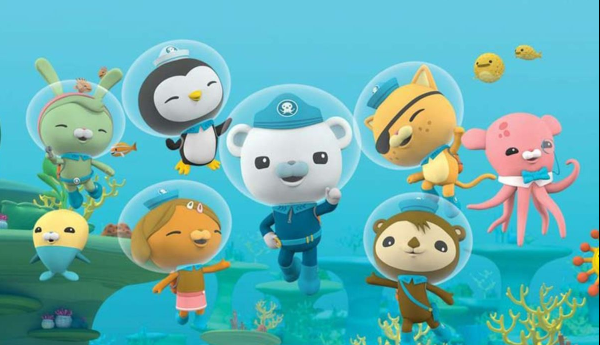
The show follows an underwater exploring crew made up of stylised anthropomorphic animals, a team of eight adventurers who live in an undersea base, the Octopod, from which they go on undersea adventures with the help of a fleet of aquatic vehicles. Although its technology is fictional, the exotic creatures and locations that the crew encounter are based on real marine animals in their natural habitats. The show’s subject matter has been compared to that of Star Trek and Thunderbirds blended with Jacques Cousteau
Learn it through use
-
Writing:
Build a blog habit or join an open-source community to share your ideas. -
Chatting:
I force myself to use English with LLMs like ChatGPT and Gemini, and I always use English prompts when coding with AI agents.
Summary
To be honest, I am still on my own journey to learn English. My final advice is to try thinking and expressing your ideas directly in English. I am certain you will find your own path.